
Home design is overwhelming. I made it simple.
By Jackie | Interior Designer | A Design Lifestyle
As Seen In ARCHITECTURAL DIGEST & FORBES

You do what everyone does.
You open Pinterest. You save hundreds of images. You scroll for hours. You feel inspired for exactly twenty minutes — and then completely overwhelmed for the next three weeks.
The paint chips pile up. The browser tabs multiply. The furniture you ordered doesn't look right in the room. The renovation quote arrives and it's twice what you expected. You question every decision and make none.
This is not a taste problem. It is a process problem.
Professional interior designers don't have better taste than you. They have a Method. A clear, repeatable sequence of decisions that removes the overwhelm and replaces it with confidence.
You don't need to hire a designer to design a beautiful home. What you need is a guide. A Method. The same one a professional designer uses for every client and every project.
Start here.
Step 1 — Answer these nine questions before you buy anything.
The single most expensive mistake in home design is making decisions before you know what you actually want. Impulse purchases. Mismatched materials. A room that looks finished but never feels right.
The antidote is a questionnaire. Answer these honestly — not aspirationally — before you touch a paint chip or walk into a store.
1. Describe your project in one sentence. 2. What is your big picture goal — first family home, forever home, or a refresh? 3. What is your driving priority — style, budget, or timeline? 4. Where will you gather your inspiration? 5. Who will live in and use this space? 6. What colors, patterns, textures, and materials do you want? 7. Is there anything you absolutely do not want? 8. How do you want your home to feel? 9. How do you want your home to function?
These nine answers become your design filter. Every decision — every material, every piece of furniture, every finish — gets measured against them. If it fits, it stays. If it doesn't, it doesn't matter how beautiful it is.
Without this step, you are shopping with no direction. With it, you are designing with intention.
Step 2 — Make three decisions and commit.
Once you know how you want to live, define what that looks like visually.
Choose one to three design styles. Not ten. More than three creates a room that looks like it can't make up its mind — and that feeling follows you every time you walk through the door.
Choose three colors and repeat them throughout your entire home. Three colors used consistently across every room create the feeling that a home was designed — not assembled. This is the most affordable design move available and the one most people skip.
Consolidate your inspiration in one place. A Pinterest board, a folder, a binder — it doesn't matter where. What matters is that everything lives together before you start buying. Scattered inspiration leads to scattered rooms.
These three decisions are your Concept. You are not buying anything yet. You are deciding.
Step 3 — Set your budget before you shop.
Most families skip this step and wonder later why they overspent or why every decision feels impossible.
Set a budget for each item and each service before you begin. Write it down. This is not a restriction — it is a filter. When you are standing in front of two sofas and one costs far more than the other, your budget tells you which conversation to have.
Three rules that save real money:
Build in a contingency of 10–20%. In any home project the unexpected always happens. The only question is whether you planned for it.
Track actual costs as you go — not after. Small overages compound quietly and turn into large surprises.
Choose your priority — style, budget, or timeline — and hold it. You cannot fully optimize all three at once. Knowing which one leads keeps you from making compromises you regret.
Step 4 — Respect the timeline.
Your timeline determines your strategy. A fast timeline means fewer custom decisions and more ready-made solutions. A slow timeline means more refinement, more customization, more room to get it exactly right.
Write your timeline down. Then add a buffer. Schedule contractors and trades based on when products are actually delivered — not when you ideally want them. Delays cascade when you don't plan for them.

Start with The School Morning Reset. I got you: Send Me the Reset →
Step 5 — Design one room at a time.
Do not try to design your entire home at once. It leads to decision fatigue, inconsistent results, and a home that never feels finished.
Pick one room. Work through it completely. Finish it. Move to the next.
Most families start with one of three:
Kitchen — if you're renovating, the kitchen drives everything. Decisions made here set the tone for the whole home.
Primary bedroom — a quick win with immediate daily impact. A bedroom that works changes how you sleep and how every day begins.
Living room — when the gathering space works, the whole home feels more functional and more like yours.
Step 6 — Work through each room in this order.
For every room — entry, living room, kitchen, dining room, bedroom, bathroom, nursery, office, laundry, outdoor — make decisions in this sequence:
Fixtures first — flooring, wall treatment, windows, doors, light fixtures, hardware. These are permanent. Decide them before anything else.
Furnishings second — furniture, window treatments, rugs. Sized correctly for the room and for how you actually use it.
Textiles third — bedding, throw pillows, blankets, kitchen and bath linens. Natural materials. Washable materials.
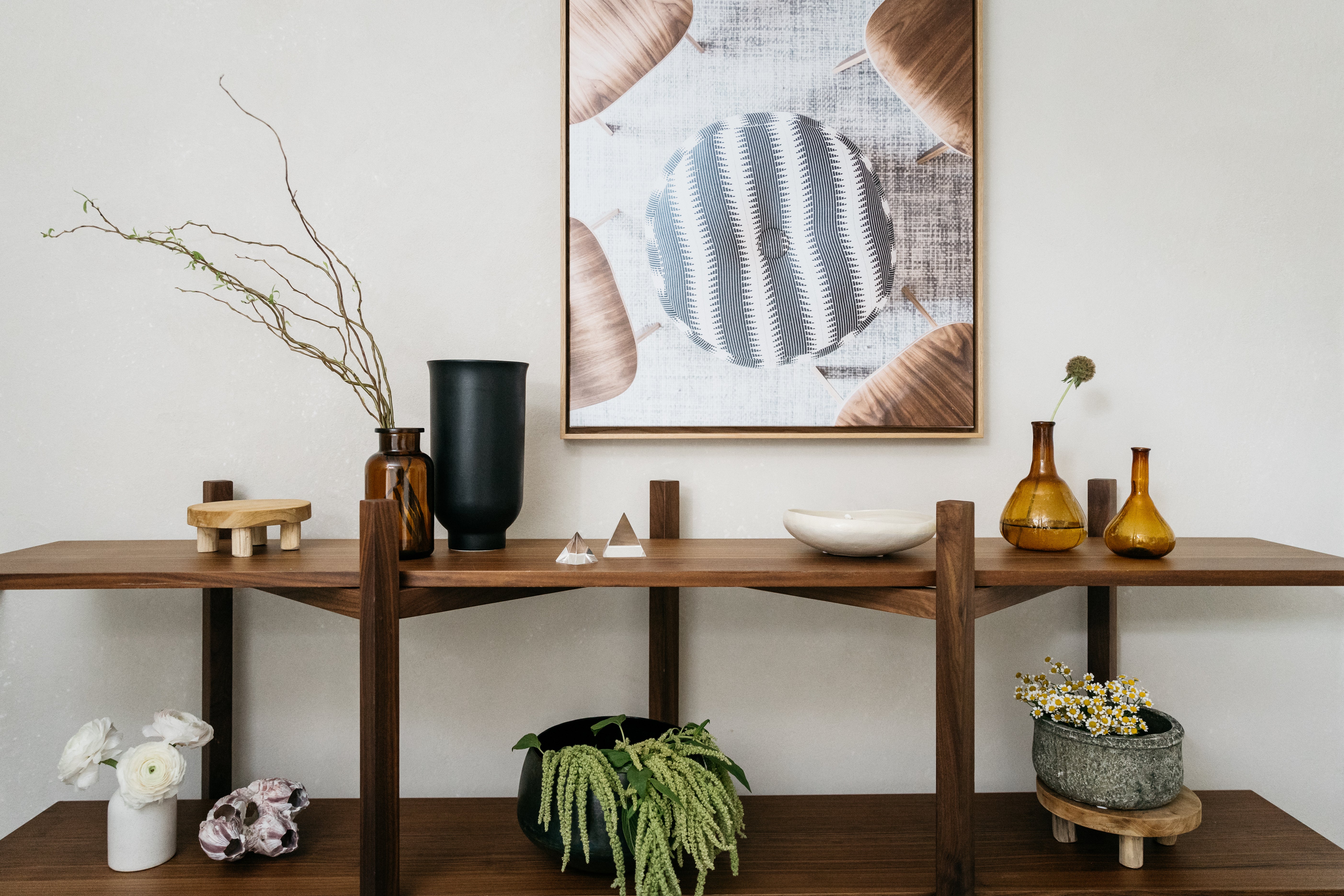
Accessories last — art, plants, storage, personal objects. These are the finishing layer you add once the room works — not the solution when it doesn't.
Maintenance throughout — before finalizing any material or finish, ask: what will this require in three years? In ten? Build maintenance into the decision now, not after you've moved in.
Step 7 — Know when to call a designer.
Most home design projects do not require a full-service interior designer. A full design engagement is a significant investment — and for the majority of families, the better use of that money is in the home itself.
There are moments where professional input makes a real difference — when decisions are irreversible, when you're managing contractors for the first time, or when you've redesigned the same room twice and it still doesn't feel right. One targeted consultation in those moments can prevent mistakes that cost far more to fix.
For everything else — the planning, the room-by-room decisions, the materials, the maintenance — you have the Family-Proof Method. You have a designer now.
The Family-Proof Method, from here.
Answer the questionnaire — before you buy anything Choose your styles, colors, and inspiration — and commit Set your budget — before you shop Define your timeline — and build in a buffer Design one room at a time — finish before moving on Work through fixtures, furnishings, textiles, accessories, and maintenance in order Ask for professional help when decisions are permanent or the room still isn't working
This is how designers do it. Now it's how you do it too.
"She kept us from making expensive mistakes by guiding us to the best choices. Jacqueline is such a gift." — C.N., San Francisco
The complete Family-Proof Method is inside the toolkit.
The Furnishing Standard Toolkit walks you through every step of the Family-Proof Method — the questionnaire, the concept phase, the room-by-room sequence, the budget planning, the materials guides, and the maintenance routines — for every room, every life stage, and every season.
Step-by-step interior design fillable workbooks and interactive project manager spreadsheets, built for family homes — from first home to forever home.
Start with The School Morning Reset. I got you:
Or go all in with the complete toolkit:

About Jacqueline Norrise
As Seen In ARCHITECTURAL DIGEST & FORBES
Jacqueline Norrise is an Architectural Digest–featured interior designer with a BFA in Interior Architecture & Design from the Academy of Art University in San Francisco, 15+ years of projects, and 100+ family homes, from the San Francisco Bay Area to New York, Los Angeles, Colorado, Seattle, and more. After years of full-service design work, she built her entire Method — the questionnaires, room-by-room guides, budget planning, materials education, and maintenance routines she used with every client — into the Family-Proof Method.
Step-by-step interior design fillable workbooks and interactive project manager spreadsheets, built for family homes — from first home to forever home.
Home design is overwhelming. I made it simple.
You have a designer.
Join the Home Refresh Club: start with the free School Morning Reset.
Follow along on Pinterest | #homerefreshclub #adesignlifestyle


